Sunday, March 12, 2023

Disney’s The Little Mermaid (1989) (Movie Review)

  Back when I was a little kid, I grew-up in San Diego County, and it made things easy for our family to make an annual tradition to drive over to Disney Land during Summer vacation. I have many fond memories of visiting the park, and one special memory that always lingered in the back of my mind was a special tour of Walt Disney’s office, in which his signature writing desk and piano were carefully preserved. Perched on top of his piano were two little brawns statues of Walt’s most cherished characters. 

One of which naturally was Mickey Mouse, who needs no introduction, and the second to my surprise was none other than the little mermaid herself Ariel. Our host explained that prior to Snow White, Ariel was the very first character that Walt Disney envisioned to bring to life in an animated feature film, and had several story notes and ideas that were arguably too ambitious for the time. Animation in general was still in its infancy, with many artists experimenting with what could be accomplished at the time, and when combined with both the financial costs, and ensuing war times, Walt elected to go with Snow White as the safer, yet still daring venture in of itself. His ideas for “The Little Mermaid” ended up getting locked away in his personal vault, and wouldn’t be discovered until decades after his passing. Fast forward to the late 1980’s, in which Disney animation was struggling to stay relevant, and had failed to produce a hit that was on par with the classics of Walt’s Golden Age. Eventually, the discarded plans for “The Little Mermaid” were discovered, and like Snow White before her, Princess Ariel launched a second Golden Age in Disney animation.

  Released in 1989, “The Little Mermaid” marked the 28th theatrical animated feature film from Disney studios, and would prove to be a milestone in their history books, both as a success, and as an inspiration on films to come. 

While many would look to “The Jungle Book” as Walt Disney’s last animated treasure before his passing, and other ideas of his like "Beauty and the Beast" would eventually come to light, I feel an argument could be made that “The Little Mermaid” was Disney's real swan song, as his ambitions and ideas for the film predated all the other classics … it’s just unfortunate that he didn’t see the film manifest into its final form. Even the opening credits highlight that “Walt Disney Presents”, as opposed to “Walt Disney Studio”. Adapted from the 1837 fairy tale of “The Little Mermaid”, written by Danish author Hans Christian Andersen, our story revolves around the Princess Ariel, of the underwater kingdom of Atlantica, who has become dissatisfied with life under the sea. Her real fascination is the human world above, which puts her at odds with the prejudice of her father King Triton. After an incident in which she rescues a human Prince from drowning, she becomes fiercely determined to become one with the world above. 

Following an emotionally heated confrontation with her father, an evil Sea Witch named Ursula takes advantage of both the Princesses sorrows and passions, and makes a deal for her to become human for three days, in exchange for her voice. The only thing to make the transformation permanent is to win the affection of the Prince, which she’ll have to accomplish without the aid of her voice. Thus, it’s a race against time to discover true love, explore the human world, make amends with her father, and all before the Witches real malevolent intentions are revealed.        

  As far back as I can remember, along with Disney’s “Fantasia”, “The Little Mermaid” was one of the very first movies I ever owned on home video, and by extent was one of the very first animated Disney movies I ever saw. While I certainly enjoyed it, and watched it a number of times as a kid, it wasn’t exactly one of my absolute favorites either. I actually have more memories of loving the animated TV series of “The Little Mermaid” back when I was a kid. 

Also, I went through something of an anti-faze for this film, after I read the original Hans Christian Andersen story, and was surprised to discover that Ariels journey was more of a spiritual one, and that her main goal went beyond simply exploring dry-land … she wanted a human soul. According to Mermaid lore, when they die, their bodies simply become one with the ocean, but have no spirit that continues on after death. Thus, Ariel is determined to have a soul, and believes that the only way to gain one is through the love of a human. Without going through all the details of the story, her journey builds to a very tense climax, in which it’ll either be her life or the life of the Prince, and in the end, she chooses to sacrifice her life, so that the Prince can live. While Ariel tragically dies in the end, the selflessness of her sacrifice allows her to have a soul, and thus was able to accomplish her dream of crossing over into Heaven. Needless to say, it was a story that left a big impression on me at the time, and it made the movie seem so disposable and safe by comparison.

  Over time however, the Disney movie has become one of those films I don’t actively think about, but it’s somehow always there for me during sick days, or when I just needed something to put me in a good mood. 

Gradually, I was able to separate it from my feelings of the original story, and simply appreciate it for its own strengths and merits, which the film has many of. The first thing this movie really got right was Ariel herself, who’s goals admittedly aren’t as compelling as in the book, but she never the less has her own strengths that make her stand apart. Truthfully, I think she has the greatest introduction scenes of any Disney Princess. We see her love for adventure and discovery on display, as well as her fallibility, as she accidently forgets a concert, and gets both her and her friend Flounder chased by a Great White Shark for good measure. Not only does it kick the film off with some excitement, but it also tells us everything we need to know about this character. While she clearly has a big heart, she’s also a little mischievous, and can make mistakes when she forgets to look at the larger picture ... something that comes into play later when she makes her deal with the Sea Witch.

  Personally, I like my protagonists best when their generally good people, but not devoid of faults, which they either have to work with or learn from, as that makes them more interesting, as well as more fun to watch. 

Also, it was a welcome change-up for the time to have a Disney heroine who was more prone to adventure and excitement, which would become a common staple after this film. Voice Actress Jodi Benson naturally brought the character to life through a solid performance, but aside from her vocal talents, the performance in the way she’s animated is outstanding. Sense she spends half of the movie mute, the animators really outdid themselves in capturing all the right inflections, expressions, reactions and excitement, to the point where her whole visual performance really leaps off the screen. I also think she’s funnier than she gets credit for … the scene when she mistakes a fork for a comb at the dinner table … cracks me up every time. If I was to pick at anything, I never liked that pink dress she’s always marketed in, as I always felt a light purple or blue would contrast better with her bright red hair, the same way the green in her tale did. 

  However, for as delightful as Ariel is, my personal favorite character by far is the little crab Sebastian, who as far as I’m concerned belongs right up there with Jiminy Cricket or Tinkerbell as one of the great Disney supporting characters. 

Samuel E. Wright delivers an energized performance, without ever coming off as an obnoxious comedic relief, and I find his bond with Ariel to be one of the most touching elements of the whole film. Sebastian doesn’t even start as a friend of Ariel’s, and is just as tempered with her as the King is. However, he gets himself roped right into her mis-adventures, and the more time he spends with her, the more he understands her, and genuinely cares for her. I suppose Ariel’s little fish friend Flounder is cute, and memorable, but still not quite as special as Sebastian. Also, as far as comedic reliefs are concerned, I think Buddy Hackett as the Seagull named Scuttle is one of the absolute funniest, and severely underappreciated. The only thing funnier than his loony terms, and screw-loose personality are how the other characters react off of him. I always chuckle at Scuttles failed effort at making romantic music, only for the Prince to respond with … “Wow, someone find that poor bird and put it out of its misery”.

  On that note, love interest Prince Eric is okay, although I mainly like him for the novelty of voice actor Christopher Daniel Barnes, who’d voice my childhood favorite version of Spider-Man from the 90’s animated series, and it’s just cool to hear such a familiar voice behind a Disney Prince. It is worth mentioning that his relation with Ariel was a little more layered than the Disney couples of the past, as they at least do basic activities together, like go out on a date. The real heart of the movie is Ariel's relation with her father King Triton, who might just be the most interesting father character of any Disney picture. The late Kenneth Mars delivers a dual performance, ranging between gentle and hot-tempered. While he clearly loves his daughter, he’s also blinded by a prejudice, is prone to anger, and it gives him this imposing presence. Back when I was a kid, King Triton actually scared me more than the villain Ursula ever did.

  Speaking of whom … lets finally talk about the nasty Sea Witch. Ursula was arguably the first Disney villain to stand as a true classic sense the days of Walt Disney, which isn’t to say the villain’s in-between were bad, but that weren’t as well known outside of fans. 

The late Pat Carroll delivered a juicy performance, and once again, the personality that comes through her animation and expressions is extraordinary. While her motivations to rule over the ocean are generic, her twisted delight and maniacal laughter that come with her schemes make her a consistently fun screen presence. Of course, her design of a half-woman and half-octopus makes her a great contrast to the mere-people. Also, her two nasty eels Flotsam & Jetsam are two of the coolest henchmen of any Disney picture. The late actress Paddi Edwars, who previously voiced Gozer from “Ghostbusters”, has an appropriately slithery voice, and gives the two a presence equal to Ursula herself. Lastly, her musical number “Poor Unfortunate Souls” is of course one of the great villain songs. It has a catchy tempo, with an electrifying build-up, starting slow and subdued, only to build in momentum and excitement. It’s also the first villain song to have a striking visual presentation, with tilted angles, great lighting, and memorable imagery.     

  The shot at the end of the song, with Ariel bursting out of the ocean as a sparkly silhouette against a sun rise … a thing of beauty. Actually, for an older animated picture from 1989, it’s still a visual marvel to behold. It’s bright, colorful, with detailed backdrops, and a lot of personality on display. 

I especially admire the consistency of animating bubbles whenever the characters move, which further sells the illusion that these characters are underwater. Speaking of bubbles, I always loved this one visual during the “Daughters of Triton” song, in which a row of bubbles part like a stage curtain … it’s probably the best thing about that number. During the Huracan sequence, new storm and misty effects were utilized with the traditional animation, which was a technical breakthrough for its time. Even the sound design has personality, as King tritons staff has a magical chime that gives it some character. Beyond the visual design, I just love the whole under water setting. Part of the reason I loved the TV series as a kid, was further exploring more of the kingdom of Atlantica.   

  Of course, this was the first in a line-up of successful Disney films to be scored by Alan Menen, who knocked it out of the park with this movies instrumental track, and as far as I’m concerned can be branded as a Disney anthem in its own right. As the movie begins, the score is quiet and atmospheric, and as soon as the mere-people appear on screen, it transitions into this grand and triumphant quire, which wins me over every single time. 

Unsurprisingly, this score won the Academy Award for Best Music. What did surprise me was that Ariels famous song “Part of your World” didn’t get any Oscar recognition, which now days is considered the best song of the whole film. Aside from its gentle melody, I just love how this song is staged, with a school of silver fish swimming in the foreground, Ariel reaching out through a whole she’s trapped behind, and an inspiring little detail is a moment featuring the famous 1640 Oil Painting of Mary Magdalene with the Smoking Flame. Surprisingly, the number almost didn’t make it into the film, as some studio heads thought it would slow-down the pace and be boring for kids. Dorthey’s famous “Somewhere Over the Rainbow” from “The Wizard of Oz” had similar reservations going against it, but in both cases, the writers knew how important these songs were for the audience to connect with the leads, and both defied expectations, coming out as knockout hits … although, Dorthey got to leave with the Oscar gold.  

  One song that did get nominated at the Oscars for Best Original Song was “Kiss the Girl”, which has taken on a life as one of Disney’s famous romantic numbers. The song itself is slow and blissful, but it also carries a surprisingly upbeat tone that really livens it up. 

It’s embarrassing to admit, but I also have a soft spot for the Ashley Tisdale cover of the song … I can’t even explain why, it was just of a time that had a charm all its own. I also feel the opening song called “Fathoms Bellow” is kind of an underrated gem. While the song is cut short in the movie, the full number on the soundtrack is kind of a rousing peace, and continues to bounce in my head after I’ve listened to it. Another lesser-known song is “One Dance”, which was never in the movie, and was added as a bonus for the soundtrack, but still sung by Ariels voice actress Jodi Benson. It’s honestly a decent song on its own, and I can picture where it might have been able to work in the movie. Of course, my favorite song of the whole film is the big, show stopping “Under the Sea”, which did win the Academy Award for Best Original Song. Even in my adult years, this musical number fills me with so much joy, and leaves me smiling from ear to ear. It’s catchy, memorable, colorful, has a fun variety of different fish, and is arguably one of the first big “party-house” musical numbers from an animated Disney picture.  

   At last, while I wouldn’t describe “The Little Mermaid” as one of the more action driven Disney offerings, it is never the less one of the most consistently entertaining of the Princess line-up. This film moves at a brisk pace, with lots of forward momentum, and just the right amount of exciting set-pieces spread throughout. It all builds to, what is still one of the most epic climaxes that Disney has ever delivered, with Ursula gaining full power, and unleashing her wrath as a giant sea monster. While the concept of a villain turning into a giant beast had been done before this, it’s still a riveting battle that set the standard for the really cool Disney climaxes that would follow in the years to come. Also, for a G-rated picture, this final battle delivers a brutal villain death, which I don’t think would work in the contemporary animated pictures of today.

  In the end, while I still view the original Hans Christian Andersen story as the more meaningful peace of work, I just can’t help but adore the animated movie as its own special achievement separate from the book. 

It took until my thirties, but “The Little Mermaid” did eventually climb-up my figurative totem pole of Disney pictures, and found a place near the top with all my favorites. As such, I feel Disney’s “The Little Mermaid” stands apart from the rest, as it just took a little longer, and worked harder to finally reach the point where I finally view it as one of the best to come from Disney. I’d encourage anyone to still read the book, as I don’t want it to disappear under the popularity of the Disney version, but still … both deserve their gold points, and both have endured as classics to be shared with the generations to come.

Thanks for reading my review of the 1989 Disney animated classic “The Little Mermaid” … and continue to enjoy the movies you Love!            

Sunday, February 26, 2023

Groundhog Day (1993) (Movie Review)

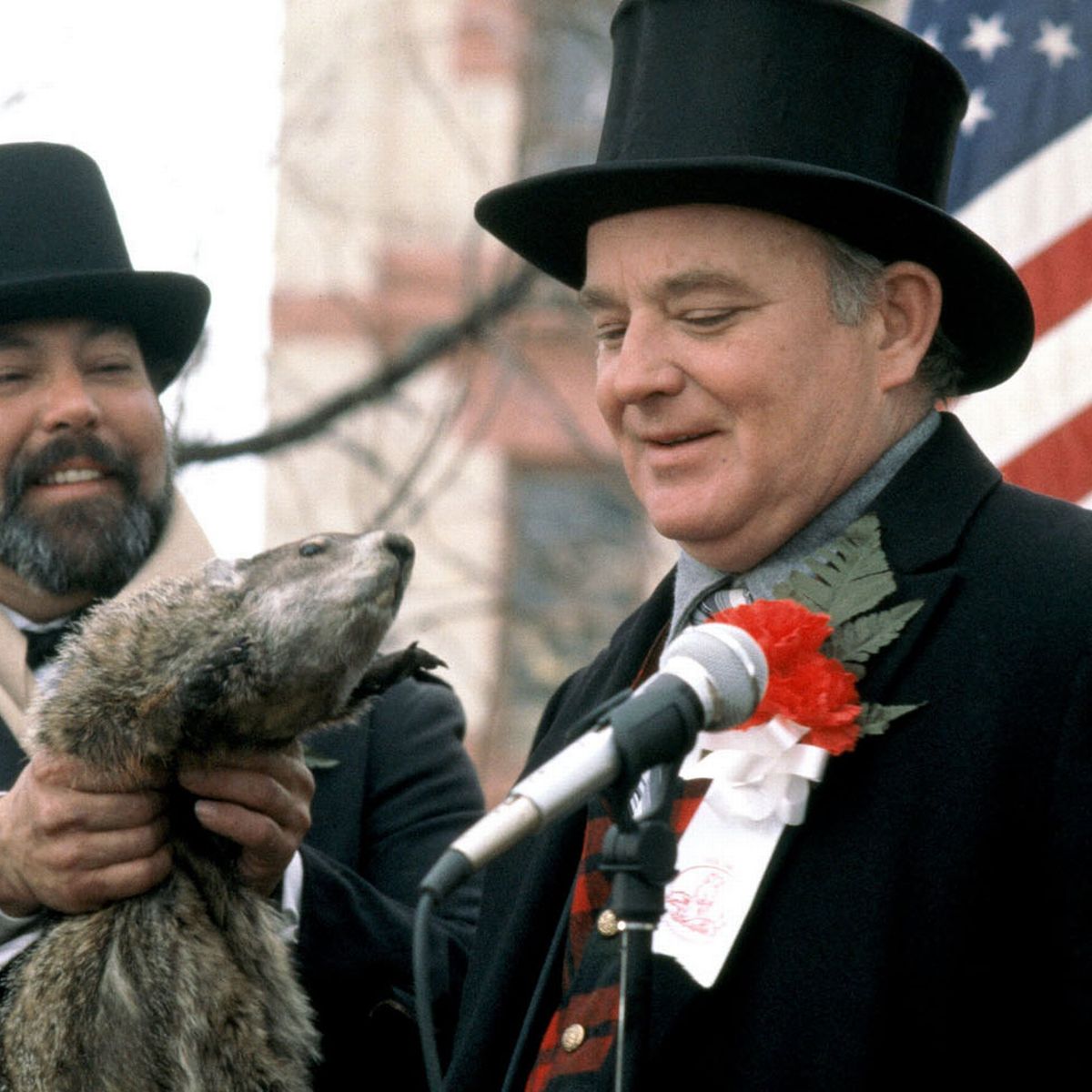
  It’s February, the month of Valentines … and by a lesser extent, it’s also the month of Groundhog Day. While I may be a few days behind, I still felt like the occasion was right to review one of the great classic comedies of the 90’s … the one that just happens to be set on the big event of February 2nd. The 1993 classic “Groundhog Day” is one of those rare comedies to take on a life of its own, and leave an impression on a larger crowd outside of genera fans. 

Director Harold Ramis and star Bill Murray were still ridding the success of hit comedies from the 80’s, including “Caddyshack”, “Stripes”, and “Ghostbusters”, so it was a safe bet that the two were going to deliver another funny hit with “Groundhog Day” … and then audiences got that little extra appeal that stuck with them more then the laughs. Speaking personally for a moment, when I first saw this movie, I was just a kid, and I never gave the film a second viewing until years after I graduated from college. Yet, in that time, I always remembered the film, occasionally thought back on it, as it left a simple, yet special impression that stuck with me over all those years. As such, while I wouldn’t label “Groundhog Day” as one of my favorite movies, I never the less have a connection with the film, and when a movie can stick with me without repeat viewings, I know it did something special that’s well worth discussing.


  Bill Murry stars as a nasty, cynical, people hating TV weather man named Phil Conners, who never once attempts to have a social life, and treats each day like a disposable event. Everything changes on one of many unremarkable February second news days, in which he reluctantly covers the annual Groundhog Day celebration, and once again dismiss any chance of spending social time with his fellow co-workers. It was all fairly standard at first … until the next morning, in which it’s suddenly Groundhog Day all over again, and everything is the same down to the last detail. It’s plenty irritating at first, but things only escalate, as for the next 34 days, it will be the exact same February second all over again. Naturally, the effect takes quiet the tole on Phil, and we see with each day all the different ways he reacts, changes and, adapts to this most unusual situation. In the end, it takes these several Groundhog Days for him to finally emerge a different … and better person then he was before.

  It’s worth noting that “Groundhog Day” wasn’t the first to utilize to premise of being stuck in a day that’s on repeat, in fact one of my favorite episodes of “Star Trek: The Next Generation”, titled “Cause and Effect”, had a similar premise revolving around a day that’s going through a loop, and that came out a year before the movie. 

However, even though “Groundhog Day” didn’t invent the formula, it’s unmistakably the most famous to utilize it, to the point where it’s now almost universally regarded as “the Groundhog Day formula” … which as far as I’m concerned is the absolute best thing to come from the holiday. In general, I always found the holiday itself to be very disposable, dismissive, and as such, I think it was a stroke of genius to set this film on the selected event of February second. I’m sure it was tempting for Harold Ramis, and fellow screen writer Danny Rubin to set this film on Christmas, which could have worked, but I don’t think it would’ve been quiet as unique, special or even as memorable if it was set on the more famous holiday. Just as a quick side-note, I was actually introduced to this formula for the first time through a Christmas special staring Donald Duck called “Stuck on Christmas”, and in its own right, it did still compliment the holiday quiet well. However, what I feel put’s “Groundhog Day” above all the others with this premise is its brilliant set-up, in that even day one was figuratively a repeat day in-of-itself. It was just going to be one of many thankless days in which our main character never changes, and stays within the same dismal loop that was his life. As such, it took a single day going through a loop that finally purpled him to move forward with his life, and break the figurative loop of his own making.     

  It’s a clever piece of writing to have a single repeated day that remains exactly the same, which is then contrasted with the individual person going through this loop, as he’s gradually changing with each morning, and that’s where the strength of this film lies. The formula of a constantly repeating day could have been, well … repetitive … to say the least, but through this, we get to see the full evolution of a single individual, as he goes from a zero to a ten. We see his confused faze, trying to figure out how to break the cycle. 

We see his selfish faze, in which he acts out all the extremes he could never get away with before, whether it be stealing money or driving his car like a fanatic. We see his desperate faze, in which he so badly wants to get out of this loop, to the point where he goes through with various suicide attempts. We then see his heroic side, as he takes note of what he can do better, and tries his best to make the most of what he’s got, by being their for others. He also breaks his own anti-social barriers through a romantic relationship with one of his co-workers named Rita. Everything effectively builds to this beautiful little moment when one of Phils close friends casually comments, “I think this was the best day of my life”, in which Phil humbly responds with “Me too”. It’s at that moment, we know he’s broken the cycle, and that tomorrow is going to be a new day.     

  There’s a number themes running throughout the movie, most obvious being the general sentiment that a person working a daily job, or maybe just has a familiar daily schedule, can feel like they’re just living each day onward without any forward momentum. This is visually highlighted best with the digits on the alarm clock flipping over, and slamming down to reveal it’s 6:00 again. It’s an impactful image that’s always lingered in my subconscious, as when I have those days of waking up early for work, or back when I was going to school, I always felt that image flash before my eyes, as if to say … yup, it’s another day again. Yet, what this film so cheerfully encourages the viewer, is that they have the power to break their own figurative loops, and can move forward with some subtle changes, like bringing others into their lives, or being less dismissive of people who could potentially be a best friend.

  Where “It’s a Wonderful Life” can be described as a story of a person reflecting on his life, and finally taking notice of what he did right, “Groundhog Day” can be described as a story of one person keeping at it, until he gets his life just right. Another meaningful theme in play is that of savoring each moment while they last, as they’ll never come again, which is very thoughtful for a movie revolving around a day that’s on repeat. This statement is highlighted best when Phil for once has a night in which he breaks the narrative, and has a special romantic moment with his girlfriend Rita, while they play around in the snow. It’s a very sweet and wholesome moment, but the next night, Phil tries to replicate all the same beats, and now it’s awkward, doesn’t feel as natural as before, and ends on a dismal note, as opposed to the previous night. That’s what I love most about this movie, in that it’s a light and upbeat experience, but with those meaningful little nuggets in all the details that we can relate to, or maybe even learn from. In general, I think it was a stroke of genius to make this movie a comedy first, that way the message can be there in the details, but without feeling forced or manipulative, which could have likely been the case, if this movie were presented as a more serious character drama.

  As far as my feelings for comedies are concerned, “Groundhog Day” never quiet produced any big belly laughs in me, but it keeps me smiling, and just leaves me feeling good afterword’s, and sometimes that’s all I really need. It’s definitely one of those cases in which the experience is more cheerful than it is laugh-out-loud funny. For it’s time, “Groundhog Day” became something of a forerunner for comedies that have fantastical elements woven through the narrative … one of my favorite examples of the time being Jim Carries 1997 comedy “Liar Liar”. The casting of Bill Murray ended up being an equally inspired choice, as he easily brings all the laughs, as he reacts differently to each day, but he also delivers the convincing transformation of a man who naturally learns to make the best of himself. Andie MacDowell also has good chemistry with him as love interest Rita. Chris Elliott is given a smaller role as a cameraman, yet still makes the most of it. It’s also cool that Bill Murrays brother, Brian Doyle-Murray has a supporting role as the towns Mayor named Buster Green. Lastly, as a long time fan of the animated TV series "Teen Titans", it's special to see Hynden Walch, the voice of Starfire, in a small role as a young bride.  

  In the end, “Groundhog Day” was a special little accomplishment for its time, and I feel it’s held up … not just as a classic comedy … but just a sweet little movie on its own grounds, and is well worth watching at least once if you haven’t seen it yet. I can speak from my own experience that it’s a movie you only need to see once, and it’ll still stick with in one way or another. For me, it’s only gotten better as I’ve gotten older, both as a cheerful experience, and as something to take merit from. Even if you’re not one for comedies, I’d still encourage you to give this film a chance … and who knows, maybe it’s just the experience you’ll need … to encourage you to make tomorrow … feel like a new day. 

Thanks for reading my review of the 1993 comedy classic “Groundhog Day” … and continue to enjoy the movies you Love!